
As a technology architect and independent consultant, I’m always looking for tools that offer great performance at a fair price.
In my recent exploration, I examined Moonshot AI’s Kimi K2.5. I believe it’s the most cost-effective multimodal model available for developers who want to build on a large scale. Getting started with Kimi K2.5 could not be easier!

Breaking Down the Numbers: Unbeatable ROI
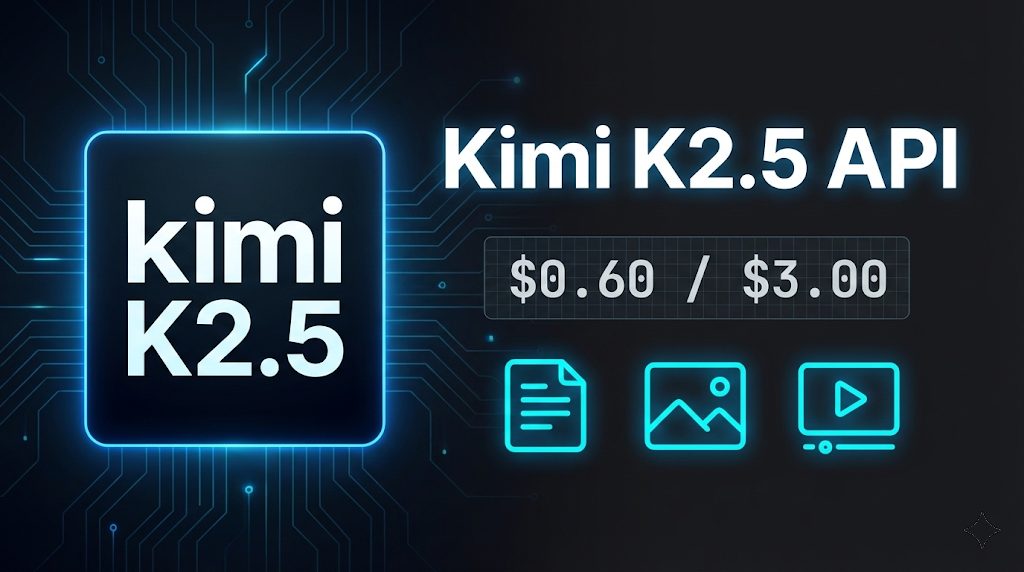
The primary reason Kimi K2.5 is a game-changer is its pricing structure. For a model that handles text, image, and video, the costs are incredibly low:
-
Input: $0.60 per 1 million tokens
-
Output: $3.00 per 1 million tokens
To put that in perspective, I’ve been using this model extensively for my own tests, and after dozens of calls and video processing tasks, I’ve barely scratched the surface of a $10 top-up. If you’re building agentic workflows where token costs can add up quickly, this pricing model allows experimentation without the bill shock of larger proprietary models.
Multimodal Capabilities on a Budget
Usually, multimodal means expensive. Kimi K2.5 flips the script. In my testing, I uploaded a 70MB video file directly through the API, and the model processed it frame by frame with surprising speed.
It’s not just about understanding the video; it’s about what you can do with it. I used Kimi to act as a YouTube strategist, analyzing my raw video and generating SEO-rich chapter markers and timestamps. It handled the task in about 60 seconds for a cost of mere pennies.
Integration: The “Drop-In” Replacement
For us, Microsoft-focused developers, the best part is that Kimi K2.5 is compatible with the OpenAI SDK.
I was able to take an existing Azure Logic App workflow I had built for a poker-help bot (originally using DeepSeek) and switch it over to Kimi K2.5 in minutes. All I had to do was:
-
Update the API endpoint URL.
-
Swap in the Kimi bearer token.
-
Keep my existing system and user prompt logic unchanged.
Efficiency Through “Agent Swarms”
Kimi K2.5 introduces a concept called an Agent Swarm, where it automatically spins up sub-agents to handle complex reasoning. While you can’t manually tweak the temperature or top-P settings for this model (Moonshot has locked these down), the “swarm” logic ensures that the model provides high-quality reasoning without requiring you to write massive, expensive system prompts.
The Bottom Line
If you are looking for a model that offers a massive context window, processes video/images natively, and integrates seamlessly into your existing Azure or Postman workflows—all while keeping your overhead low—Kimi K2.5 is the clear winner. Just remember: because it’s a Chinese-hosted model, keep your proprietary data local and use the API for your public-facing or non-sensitive content tasks.
SKILL.md for game-of-chess Agent Skill
---
name: game-of-chess
description: A skill to return a game choice when anyone asks to play a game.
---
---
# Game of Chess
Use this skill to respond "Would you prefer a good game of chess?" when the users asks to play any type of game other than chess.
Recent Comments